Straight answers about film for homes and buildings — what it does to the view, what it does to your cooling bill, and what to ask before anyone touches your glass.
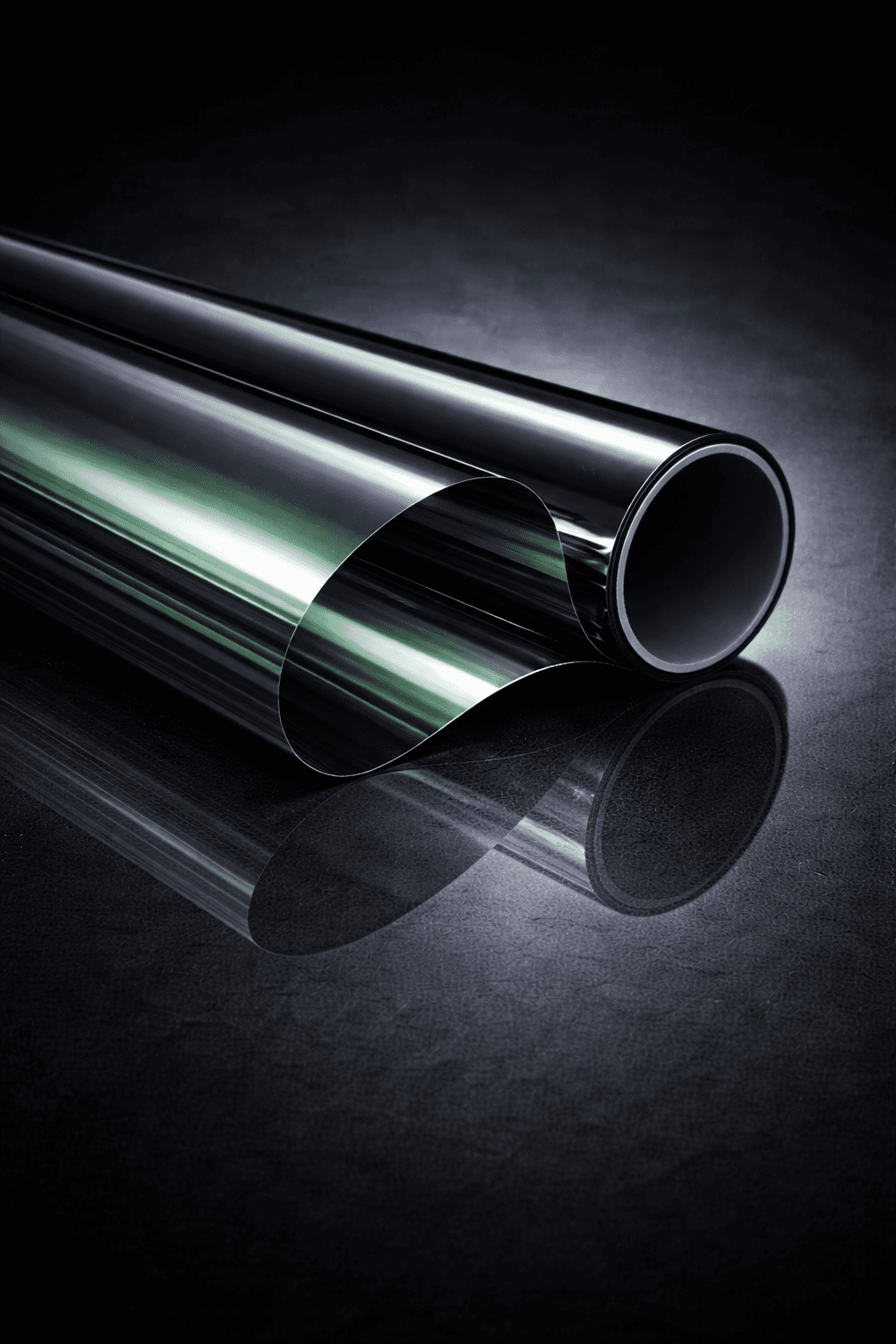
Architectural window film is a thin layer bonded to glass you already own. It turns away the heat and ultraviolet that ordinary glazing lets straight through, without the cost and disruption of replacing the windows. For a building in Jakarta's climate, that is mostly a question of how hard your air conditioning has to work and how quickly your interiors fade.
Below are the questions we're asked most. If yours isn't here, ask us directly — we'd rather answer it than have you guess.
On almost any flat glass — sliding doors, skylights, shopfronts, curtain walling, large picture windows and small divided panes. An installer cuts each piece to the shape of the glass it's going on. It also works on most double-glazed and low-e glass, but not every film suits every glass type, so the glass should be identified before a film is chosen.
Almost always the inside. Interior film is protected from weather and lasts longer. Exterior-grade film exists for glass that can't be reached from within — high skylights, atrium glazing, secure areas — and it's a different product, not the same film applied to the other face.
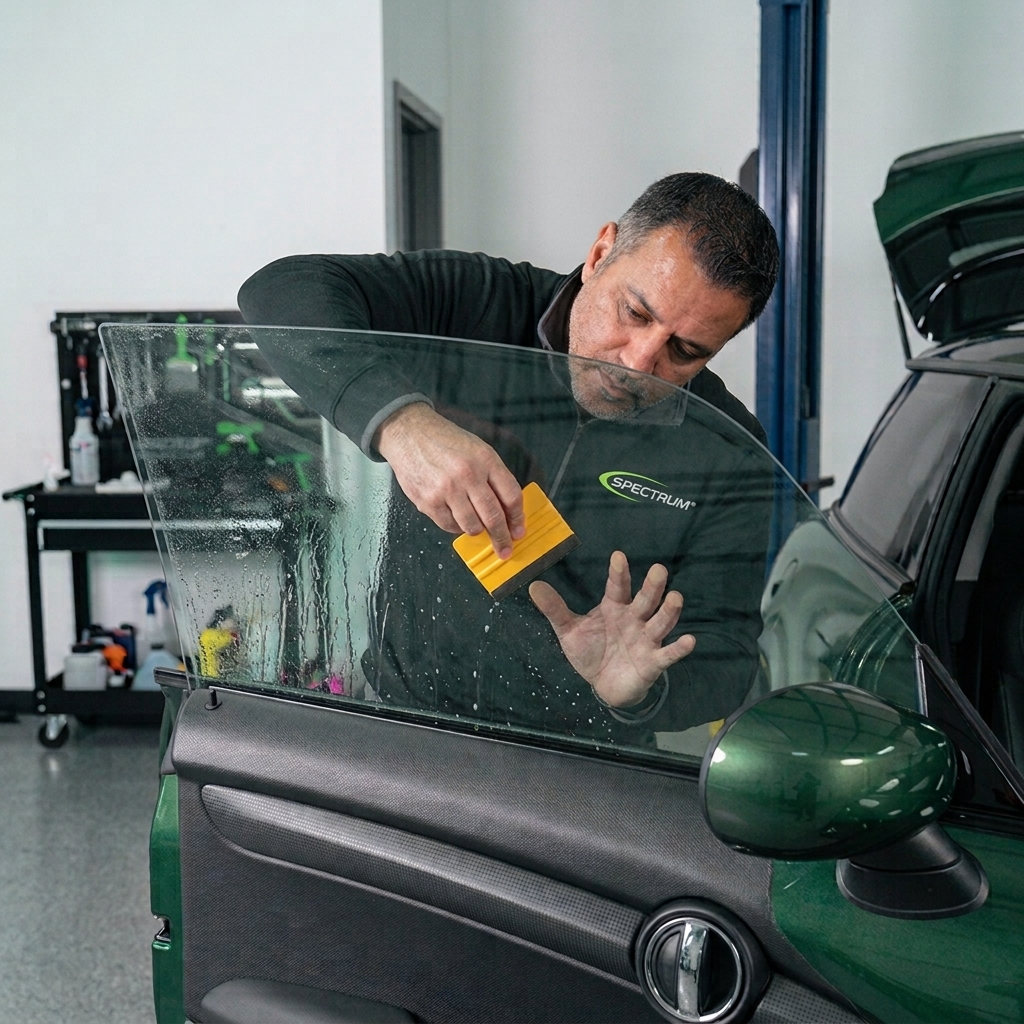
The glass is cleaned thoroughly, the film is cut to size, and it's applied with a water-based slip solution and squeegeed down. Preparation is most of the job: nearly every installation failure people notice later — lifting edges, trapped grit, haze — traces back to how the glass was prepared rather than to the film itself.
Not especially. The solution is water-based, work happens pane by pane, and a room can usually stay in use around the installer. Furniture near the glass gets moved back and floors are protected, and that's typically the extent of it.
A house is often a single day. Offices, shopfronts and towers scale with the glass area and with access — rope access or scaffolding on a facade adds far more time than the filming itself. Tell your installer about any constraints when booking; most will work around opening hours.
The film is clear immediately but the remaining moisture behind it takes time to evaporate through the film. During that period you may see slight haze or small water pockets. In Indonesian humidity this usually settles within a few days to a few weeks depending on the film, the glass and the weather. It clears on its own — don't press or squeegee it.
Yes. Solar control film is optically clear — you're looking through a filter, not a screen. How much it changes the view depends entirely on which film you choose, from near-invisible up to a deep tint or a reflective mirror finish.
Only if you choose a film that does that. Rooms with filmed glass are often brighter in practice, because there's less reason to keep blinds down all day. The choice runs roughly like this:
It filters sunlight rather than blocking it. The point is to remove what you don't want — the infrared you feel as heat and the ultraviolet that fades interiors — while keeping as much visible light as the film's shade allows. Visible light transmission is published for every Spectrum film so you can see exactly how much light a given shade keeps.
Purple film and bubbling are what happens when cheap film breaks down: the dye that gave it colour degrades under UV, and the adhesive fails. Spectrum's films get their colour from carbon dispersed through the film or from metal layers, not from dye, so there's nothing in them to break down that way.
A clear film is essentially invisible from the street. A tinted film reads as darker glass; a reflective film reads as a mirror in daylight and reverses after dark, when the inside is brighter than the outside. If a uniform look across a facade matters — which it usually does for a building owner — use the same film on every elevation.
It lowers the cooling load, which is where the saving comes from. Solar gain through glass is a substantial share of what an air conditioner has to remove, and studies of solar control film report cooling energy savings in the range of 10–30%, with the largest reductions on west- and east-facing glass. The result depends on your glass, your orientation, your shading and how you run the building, so treat any single number as an estimate rather than a promise.
Both, and the felt difference often arrives first. Sitting next to hot glass, you're being warmed by radiation directly, not only by air temperature. Cutting that radiant heat makes a seat by the window usable at times of day when it previously wasn't, even before the thermostat catches up.
It slows fading considerably; nothing stops it completely. Ultraviolet is the largest single contributor and Spectrum film blocks 99% or more of it. Visible light and heat also contribute, which is why a darker or higher-rejection film protects more than a near-clear one. Expect a large improvement, not permanence.
Yes, and it's one of the most immediately noticeable effects in an office. Glare tracks visible light transmission, so a darker film cuts more of it. If glare is the main complaint rather than heat, that shifts which shade makes sense.
These are the four numbers on every Spectrum spec sheet, and they're what lets you compare films honestly:
That takes a dedicated safety or security film, which is a thicker, different product from solar control film — a solar film is not a substitute and shouldn't be sold as one. If impact, storm or break-in resistance is your reason for filming, say so at the outset so the right product is specified.
No. Wait until it has fully cured, then clean it as you would glass, with a soft cloth or a non-abrasive paper towel and ordinary glass cleaner. Avoid abrasive pads, blades and anything hard or metallic — film is scratch-resistant, not scratch-proof.
Years, and typically well over a decade for interior architectural film. Lifespan depends on the film, the glass, the orientation and how much direct sun the elevation takes. West-facing glass in full Jakarta sun works harder than a shaded north elevation, and ages accordingly.
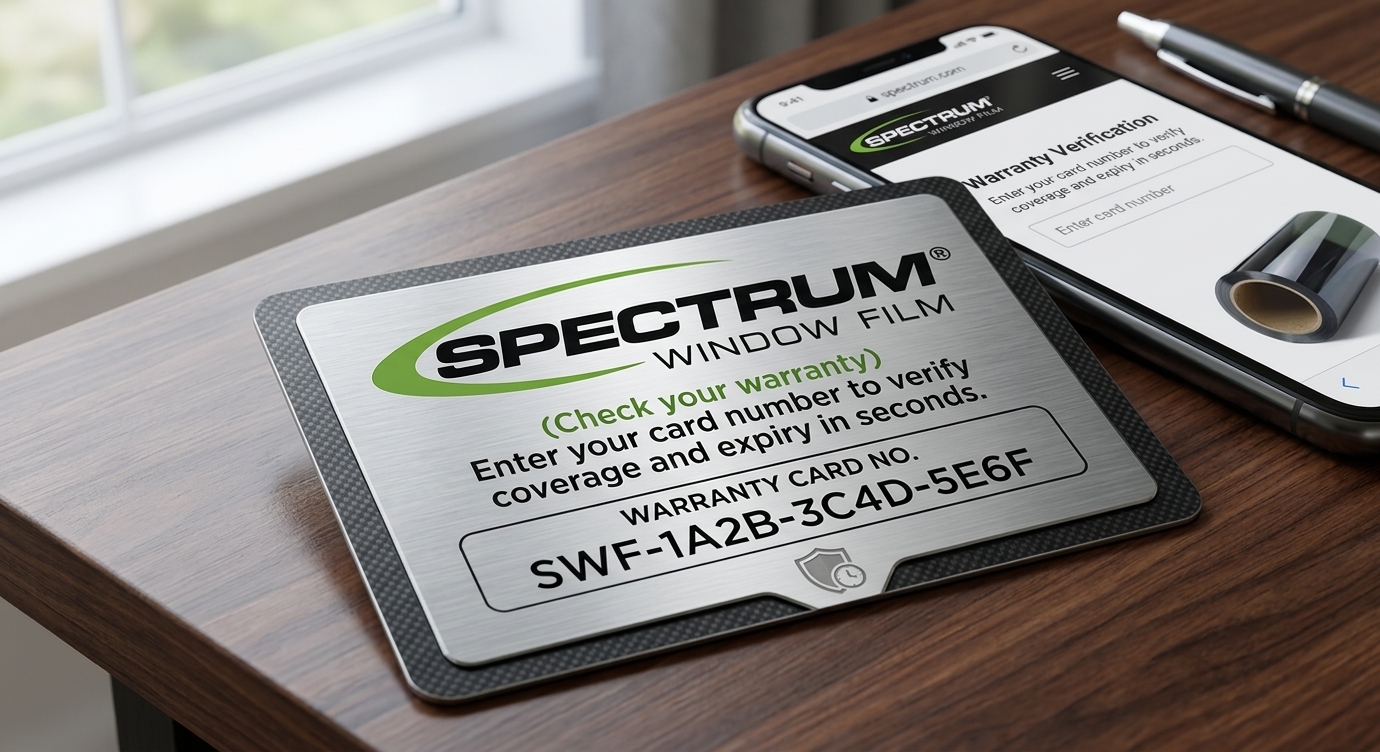
Yes. Spectrum film is covered by a manufacturer's limited warranty, and coverage varies by product and application — architectural and automotive terms are not identical. Ask your installer for the warranty document that applies to the specific film being fitted, and keep it with the batch details from the installation.
Yes. Film is made to stay put, but it can be taken off without damaging the glass, even after many years. Removal is a job for an installer — heat and the right solution lift the film and the adhesive residue cleanly, where scraping at it will not.
It can, on some sealed double-glazed units. A few glass manufacturers exclude applied film, and a dark or highly reflective film on the wrong glass can raise thermal stress. This is worth checking before work starts rather than after — your installer should confirm the film is suitable for your glass type.
It can contribute. Solar control film reduces cooling energy, which is what the energy efficiency criteria in rating systems such as GBCI's Greenship measure. It's a retrofit measure rather than a certification in itself, so it counts toward a score alongside everything else the building does.
The right film depends on your glass, which way it faces and what's bothering you most — heat, glare, fading or privacy. An installer can look at the actual glazing and tell you what fits.
Answers here describe architectural window film in general. Performance figures are laboratory values for the film itself; results on your building depend on the glass, orientation and how the building is used — ask a Spectrum installer about your specific glazing.