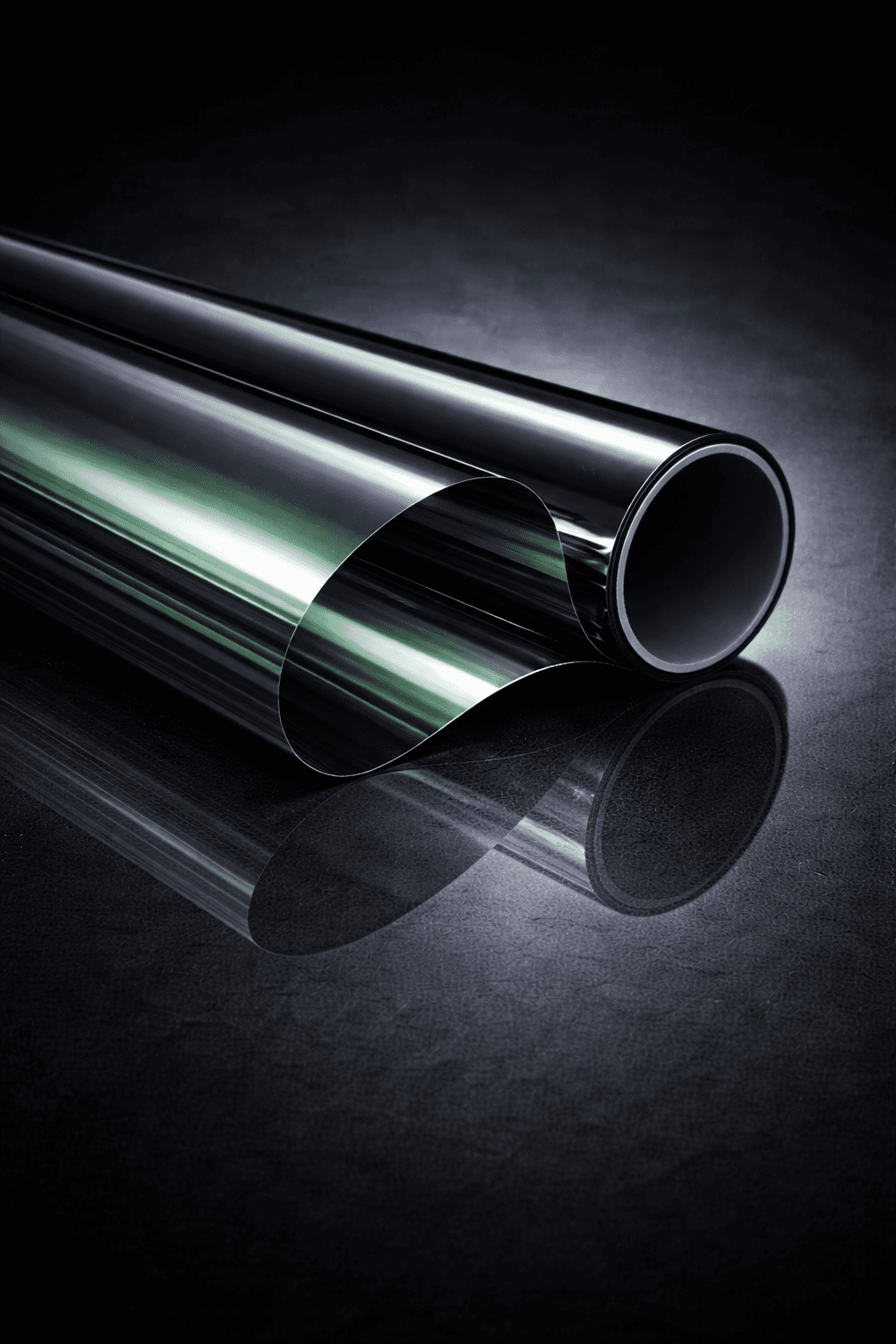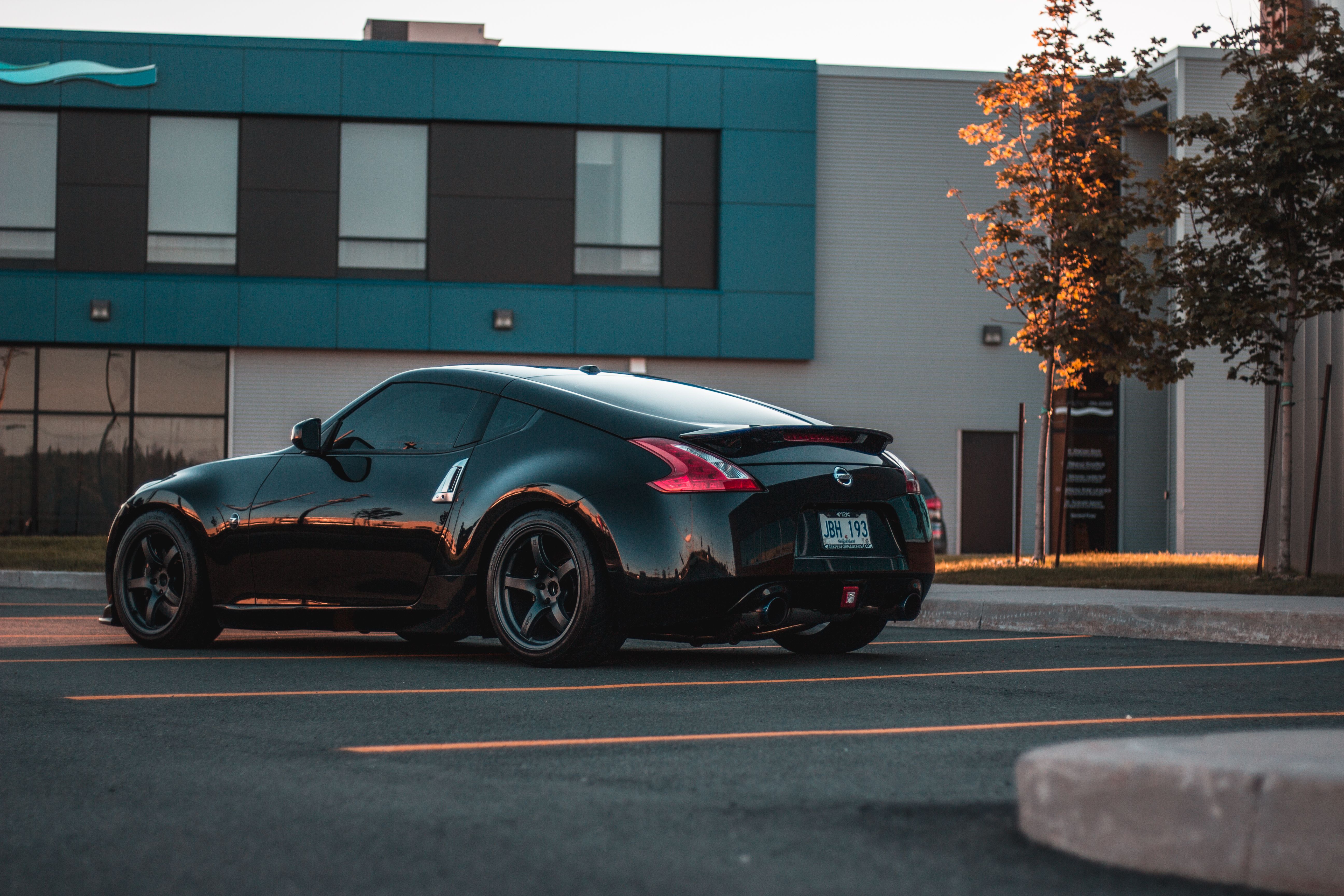
Deep black from outside, clear from the driver's seat, and the only film we make that stops ultraviolet outright.
UV 400 is named after the number that matters. Ultraviolet runs to roughly 400 nanometres, and this film blocks the lot of it — all of UVA and all of UVB. That is the part of sunlight that cracks a dashboard, bleaches a headliner, hardens leather and reaches your skin through side glass on every drive.
The look is the other half of it. UV 400 is a deep, flat black from outside for privacy, but neutral from the inside so the view doesn't take on a colour. Its Chip Technology construction disperses carbon through the film instead of relying on a dyed layer, which is why the shade you drive away with is the shade you keep. The full performance data is below, and downloadable.
Not 99 — the full stop. UV 400 is named for it: the film blocks the ultraviolet band up to 400 nanometres, which is the whole of UVA and UVB.
The deep black reads as privacy from the street, but from the driver's seat the view stays open and neutral. No colour cast, no looking through a filter.
Carbon dispersed through the film rather than laid on as a dyed layer. It's why the black stays black: there is no dye in it to break down, so it can't fade or shift purple.
Non-metallic and non-conductive. Phone reception, GPS, Bluetooth, keyless entry and toll transponders all behave exactly as they did before.
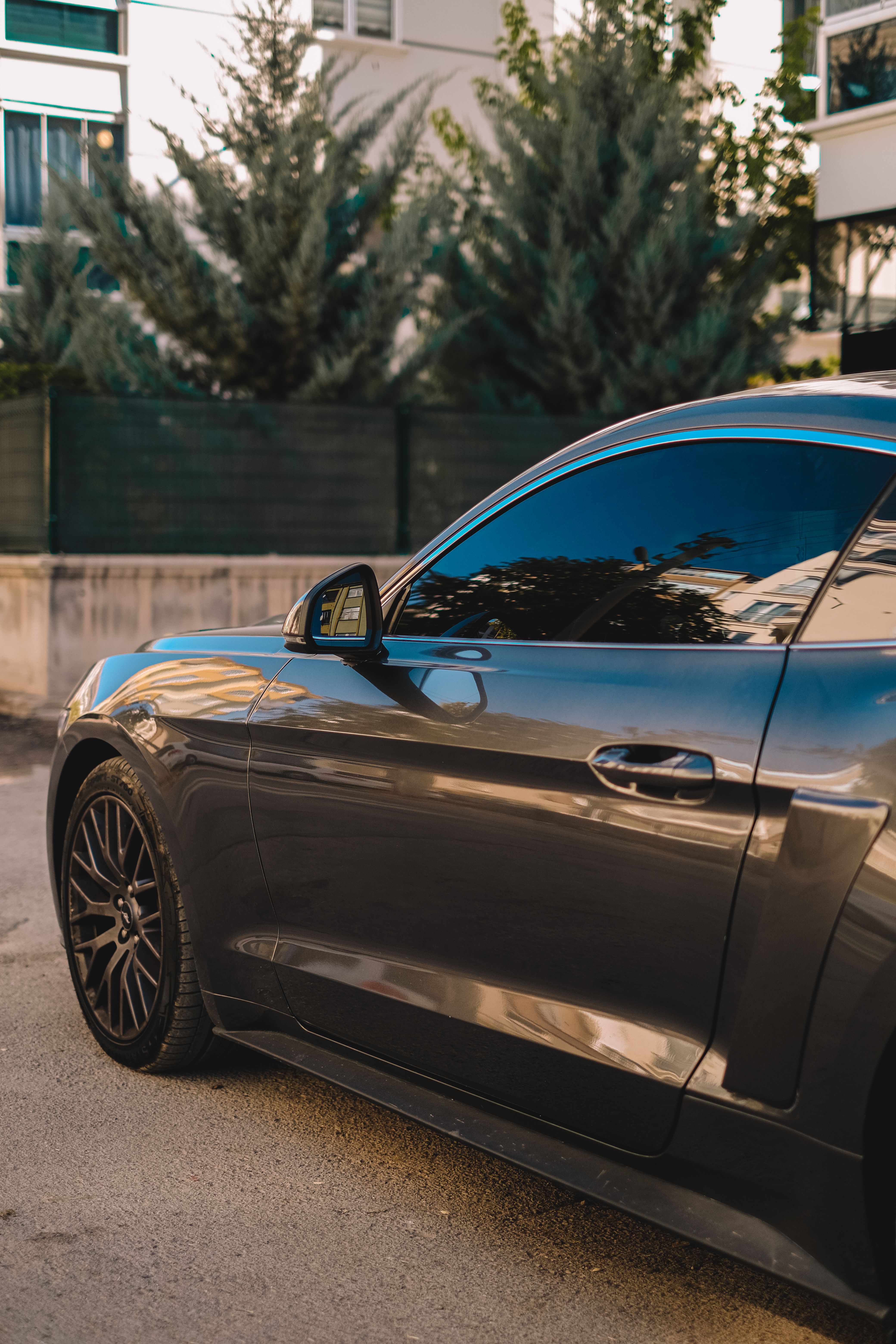
UV 400 comes in 3 shades, from 40 at 26% VLT through to 80 at 5% — near-limo, and about as much privacy as a car can legally carry in most places. The finish is identical across all three; only the darkness changes.
Pick by how much you want to be seen, not by how much heat you want rejected — the numbers run close together across the range, so the darkest shade is not meaningfully cooler than the lightest. If maximum heat rejection is the goal, look at Spectrum Steel instead.
We publish the numbers for every shade so you can compare them yourself. Download the sheet, or take it straight to an installer.
Values are measured on the film and calculated for single-pane, nominal 3 mm clear glass. Figures are taken from representative product samples and are subject to normal manufacturing variance; actual performance on your vehicle varies with the glass it is applied to.
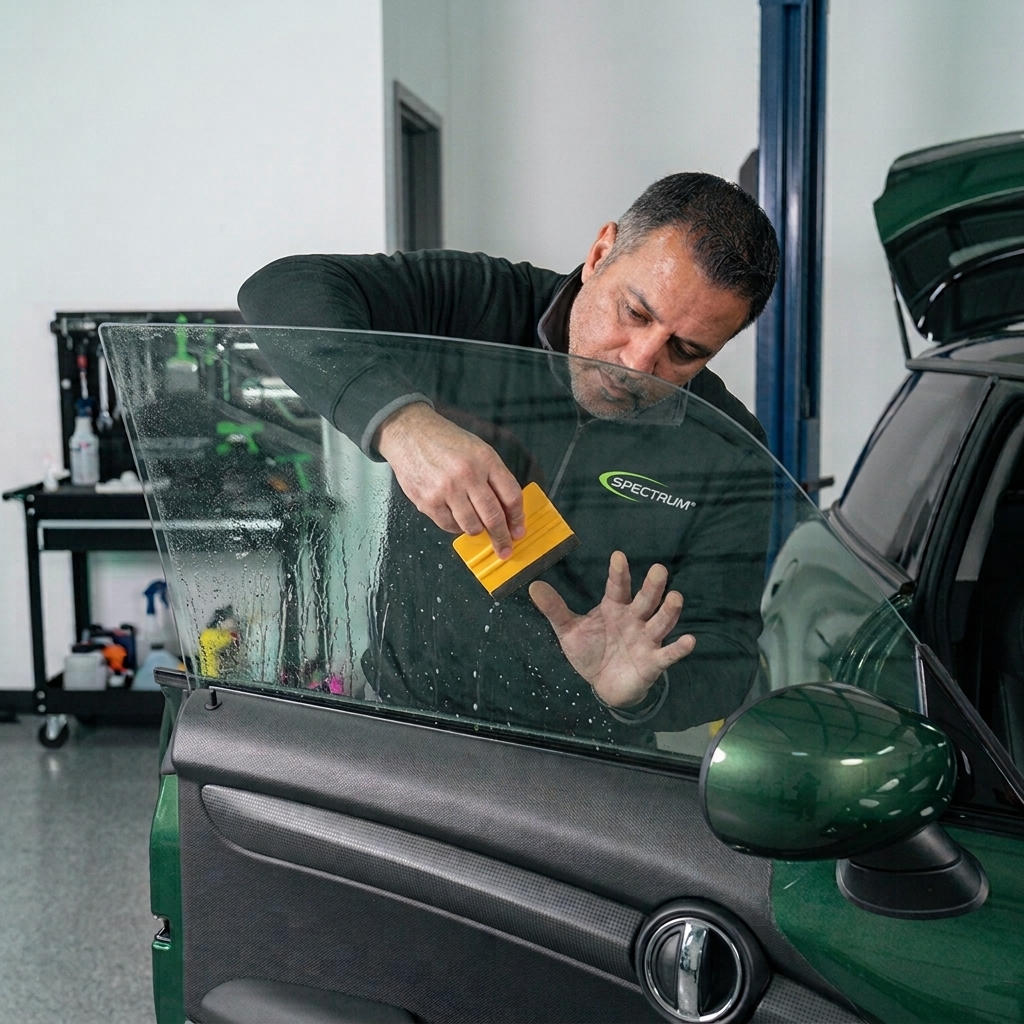
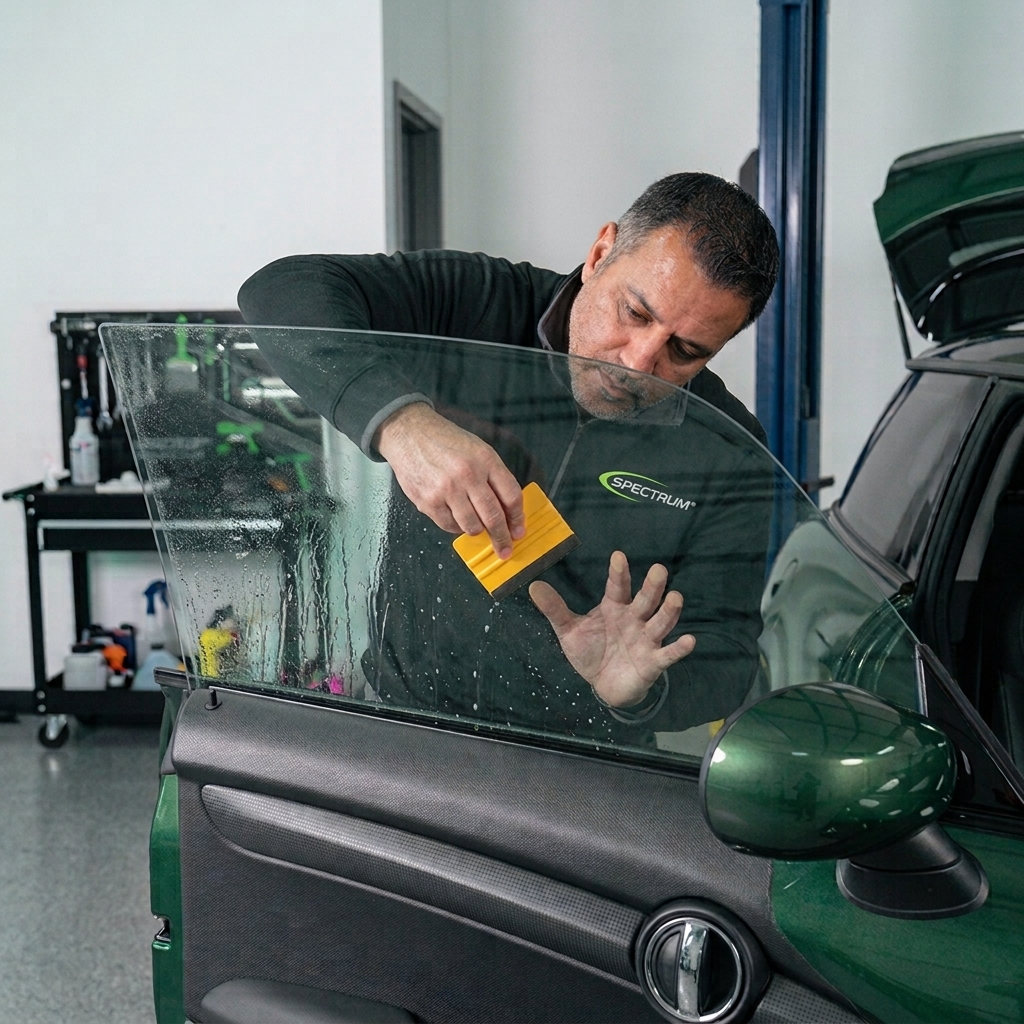
5% VLT sounds dark on paper and looks different on glass. Put each shade on the car, look out through it, then take the result to an installer.
Performance figures are laboratory values for the film itself; results on your vehicle depend on the glass. Some tint levels are restricted on windshields and front windows — ask a Spectrum installer about the rules where you drive.