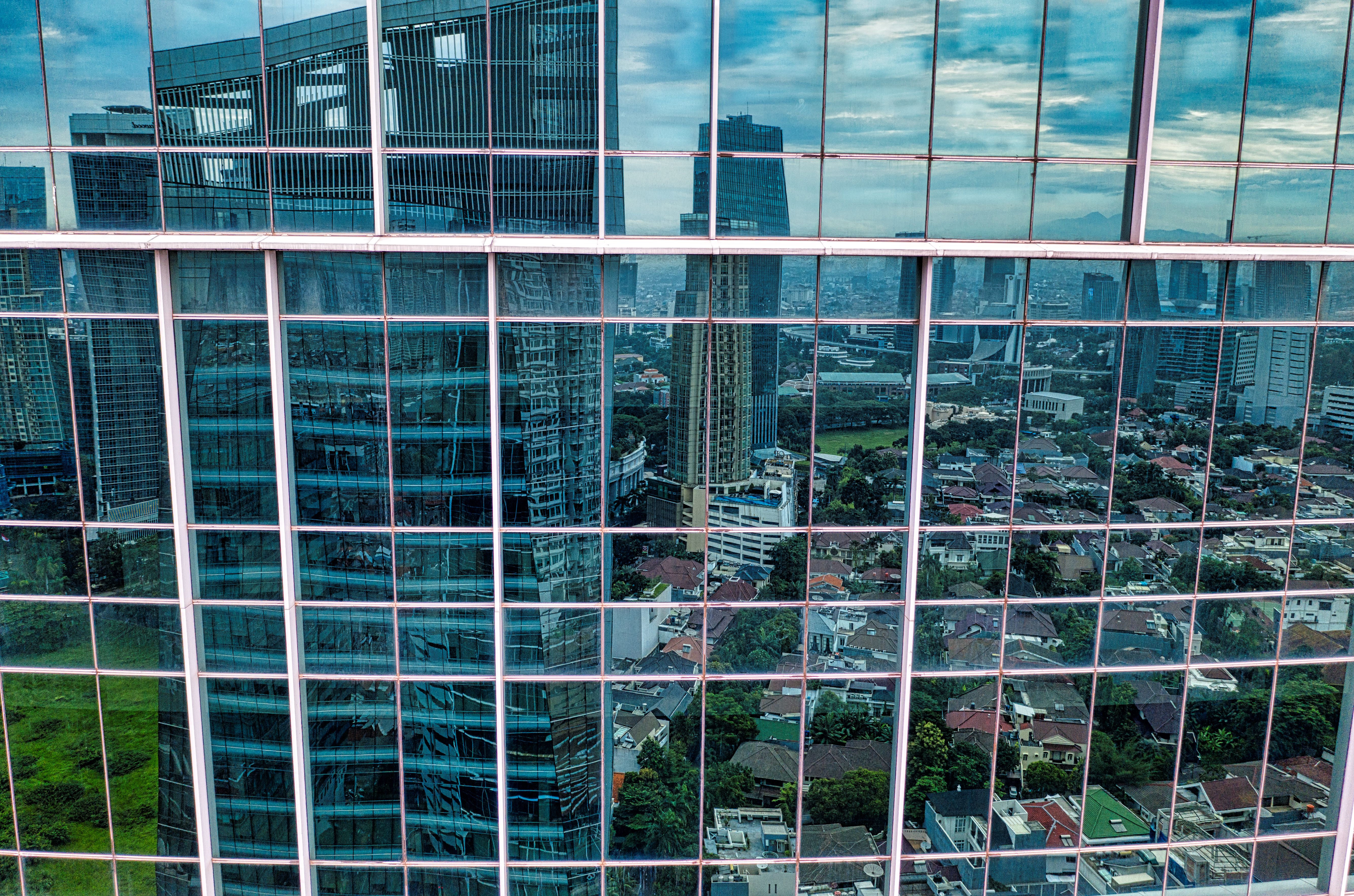
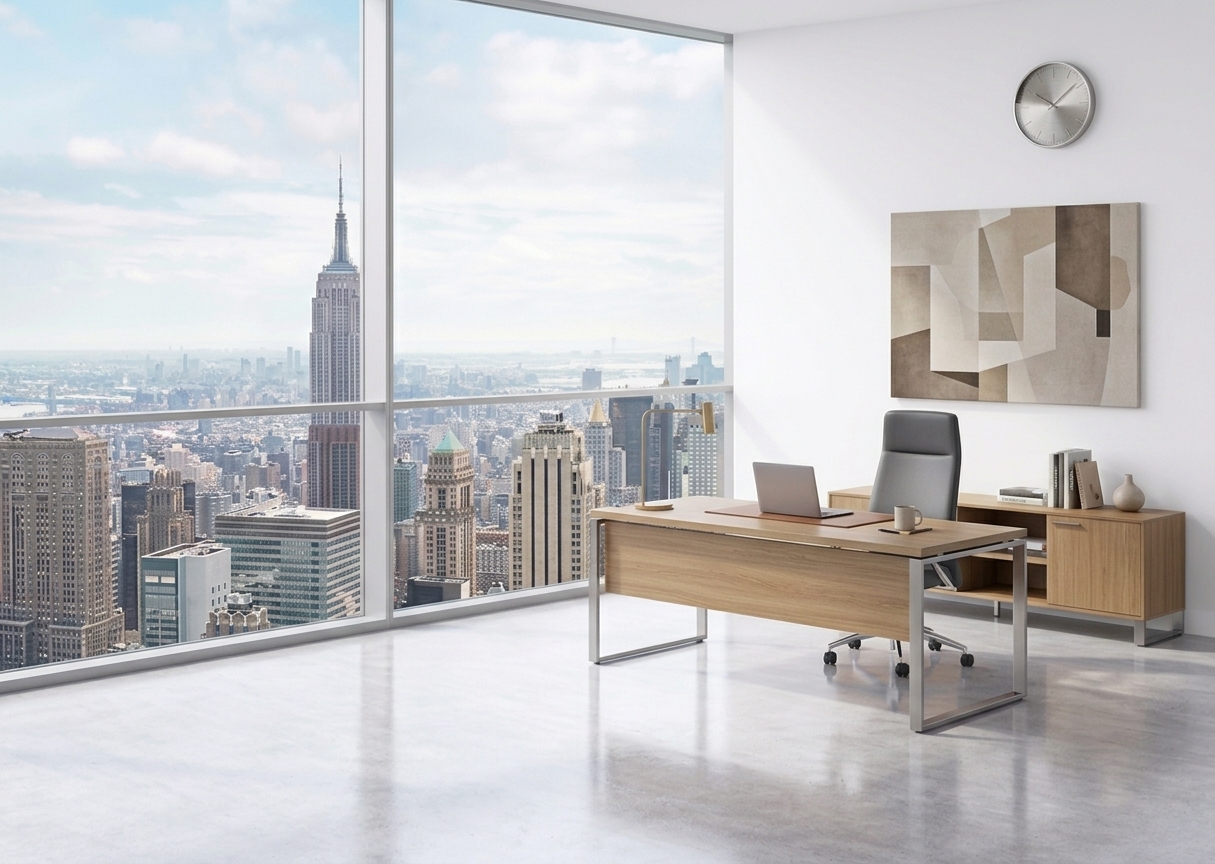
See what film does to a floorplate before it is specified — the daylight that survives, the glare that doesn't, and how the facade reads.
Solar control gets specified from a spreadsheet, and then someone stands in the room and doesn't like it. This is the other half of the decision: how much daylight a given film leaves on the floorplate, what it does to the view, and how the glass reads from a desk beside it. Pick a film below and the room updates.
Hold Compare to snap back to bare glass. When you've found a candidate, download the image for a drawing or a client pack, or copy the link and send it on.
Every Spectrum film, on real curtain walling. Bright glass takes the tint; the furniture in front of it doesn't.
—
Figures are the published laboratory values for this film measured on single-pane, nominal 3 mm clear glass. Performance on a building depends on the glazing it is applied to — ask us for the architectural data sheet for your project.
Trace mode. Click the photo to drop points around a pane. Backspace undoes, Esc clears, Enter closes the pane and starts a new one.
Renderings are illustrative. The way film looks on a building depends on the glazing make-up, the orientation and the light at the time of day — talk to us about samples and architectural performance data before specifying.